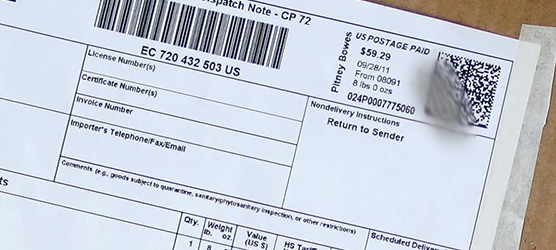
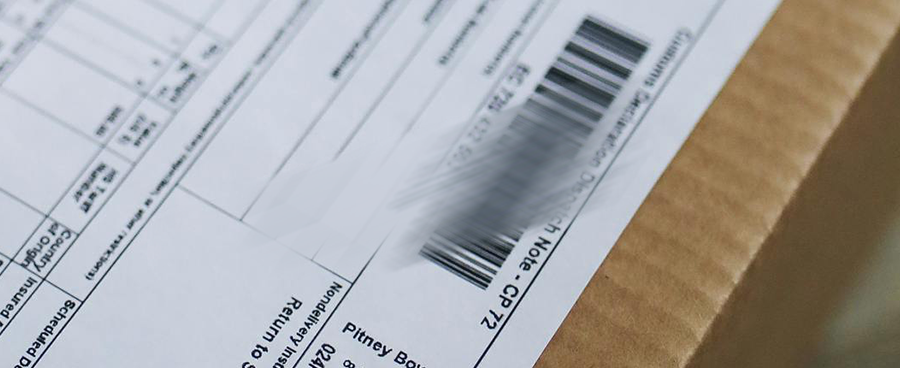
In the high-stakes sectors of global logistics and industrial manufacturing, a label is far more than a simple identifier—it is a critical data carrier.
At Coding Solutions Inc. (CSI), we approach these "data failures" through the lens of material science and mechanical engineering. Achieving a permanent, scannable mark requires the perfect synchronization of chemistry, thermal dynamics, and hardware calibration.
Smudging isn't just "bad ink"—it's a systemic failure of surface energy synchronization between substrate and delivery hardware.
While many operators attribute smearing to "bad ink," the root cause is typically a mismatch between the substrate’s surface energy and the printer’s delivery method.
Case Study: Epson ColorWorks Series
Case Study: Zebra ZT / Sato CLX
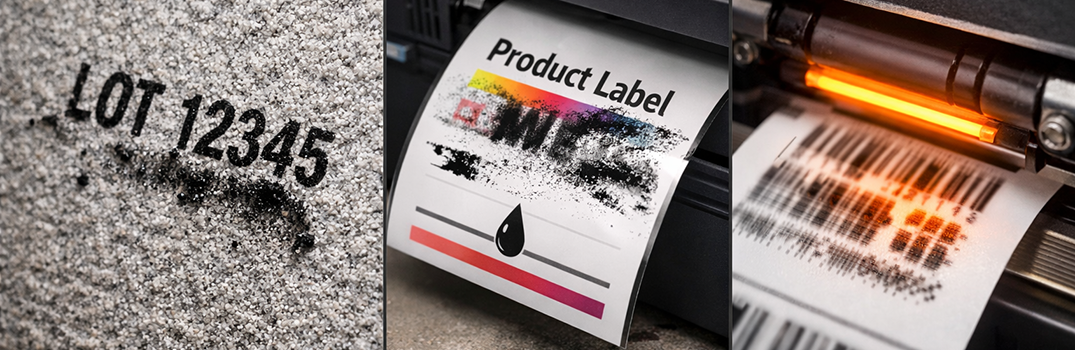
Large-character Drop-on-Demand (DOD) systems are highly sensitive to ambient humidity. Industrial dust can act as a physical bridge, "dragging" wet ink across the media path.
To maintain professional-grade legibility, CSI recommends the following engineering adjustments:
Slowing Inches Per Second (IPS) throughput increases dwell time, allowing fusers to stabilize the toner or ink before stacking.
Reducing resolution to 300 DPI facilitates faster dry times without sacrificing barcode decodability.
For glossy or synthetic substrates (PP/PET), the chemical "cure" rate is significantly slower than standard paper. Implementing a 24-hour stabilization period in a climate-controlled environment allows the ink to fully bond.
Physical protection is the final line of defense. Utilizing a pressure-sensitive laminate or UV-resistant coating "locks" the pigment in place, ensuring data remains scannable under extreme mechanical stress.
At Coding Solutions, we don't just sell labels; we engineer uptime. Whether you are optimizing a Zebra ZT600 or deploying an Epson ColorWorks, our technical team is here to ensure your execution is flawless.
We are committed to being a trusted, single-source provider for all industrial identification and labeling needs. For over 25 years, we have specialized in delivering a complete line of high-quality products, from custom-printed labels to advanced thermal printers and label application systems.